

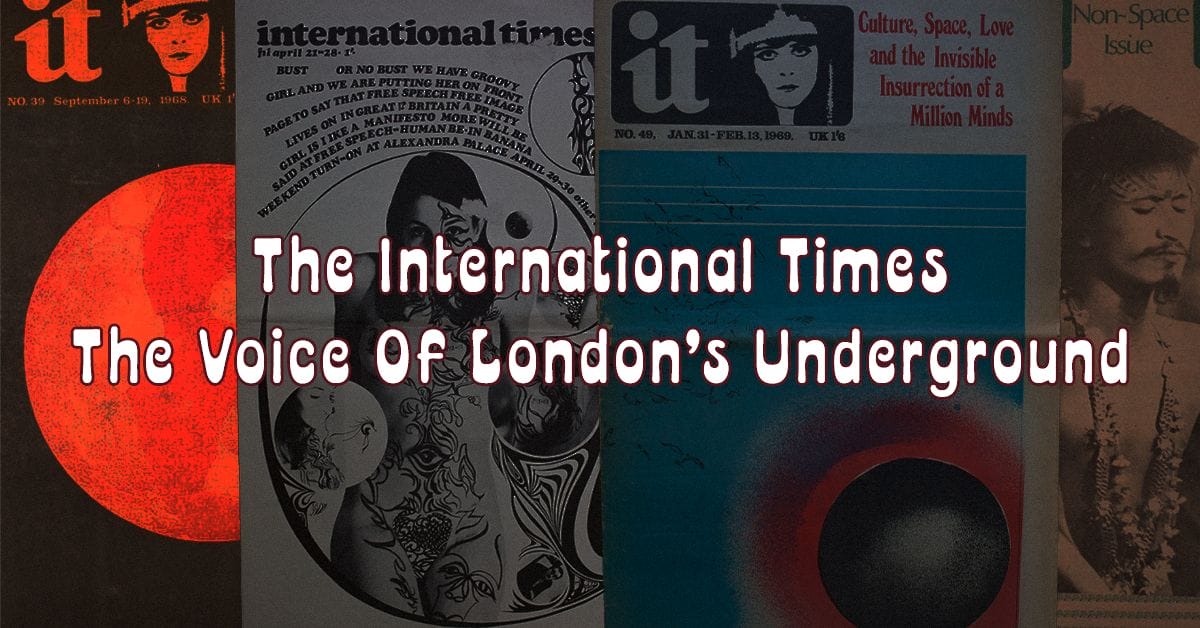
In the mid-1960s, London was buzzing with change — music was louder, art was bolder, and the youth were waking up to a new way of seeing the world. Out of that creative chaos came The International Times (or IT as it came to be known), a groundbreaking underground newspaper that captured the heart of the counterculture movement.
Movement In Print
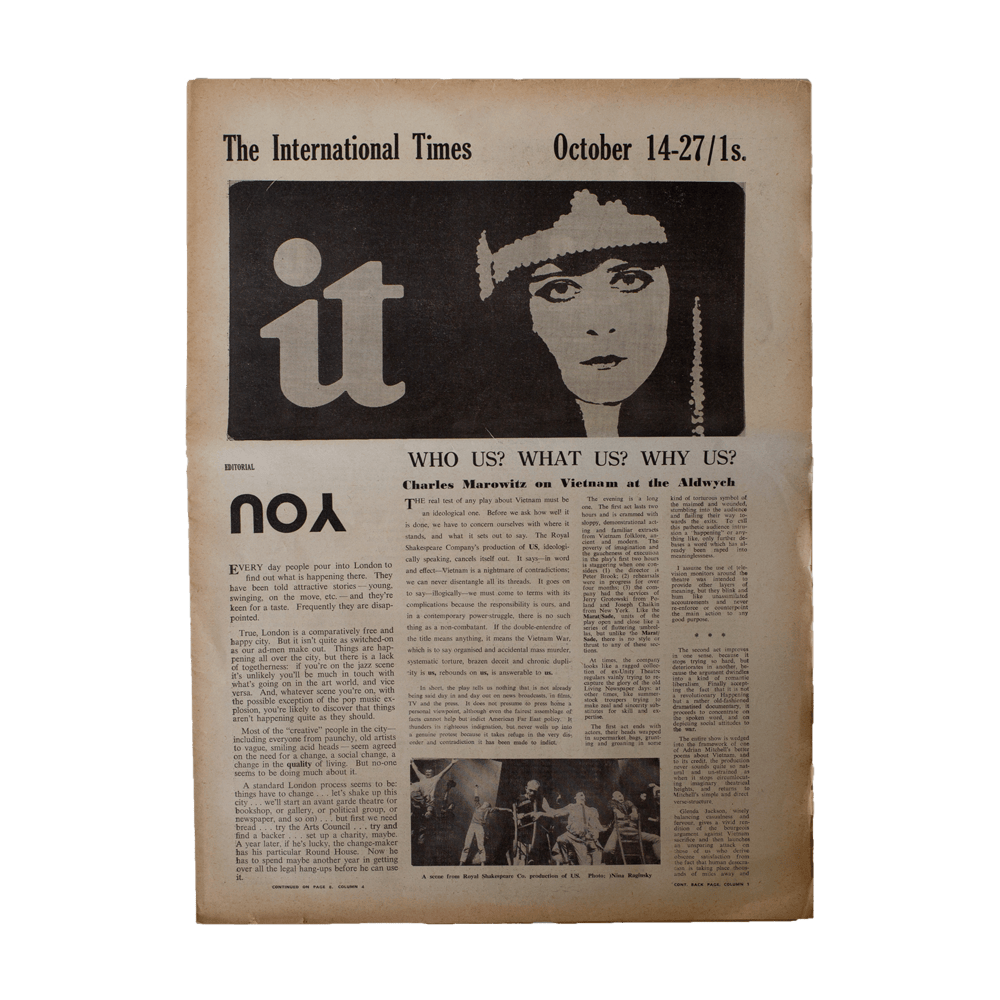
Founded in 1966 by a group of artists and activists — including John “Hoppy” Hopkins and Barry Miles — the International Times became the go-to publication for London’s underground scene. It wasn’t just about news; it was a movement in print. From the UFO Club to Pink Floyd’s first gigs, psychedelic art, free love, and anti-war protests, IT documented the spirit of rebellion and self-expression that defined an entire generation.
Mainstream media wouldn’t touch the topics the International Times explored. It published articles on drug culture, censorship, radical politics, and spirituality — all written with a sense of humor and creative freedom that perfectly reflected the times. Of course, that boldness came with consequences. Police raids and obscenity charges followed, but every attempt to shut it down only made the International Times more iconic.
The Psychedelic Press
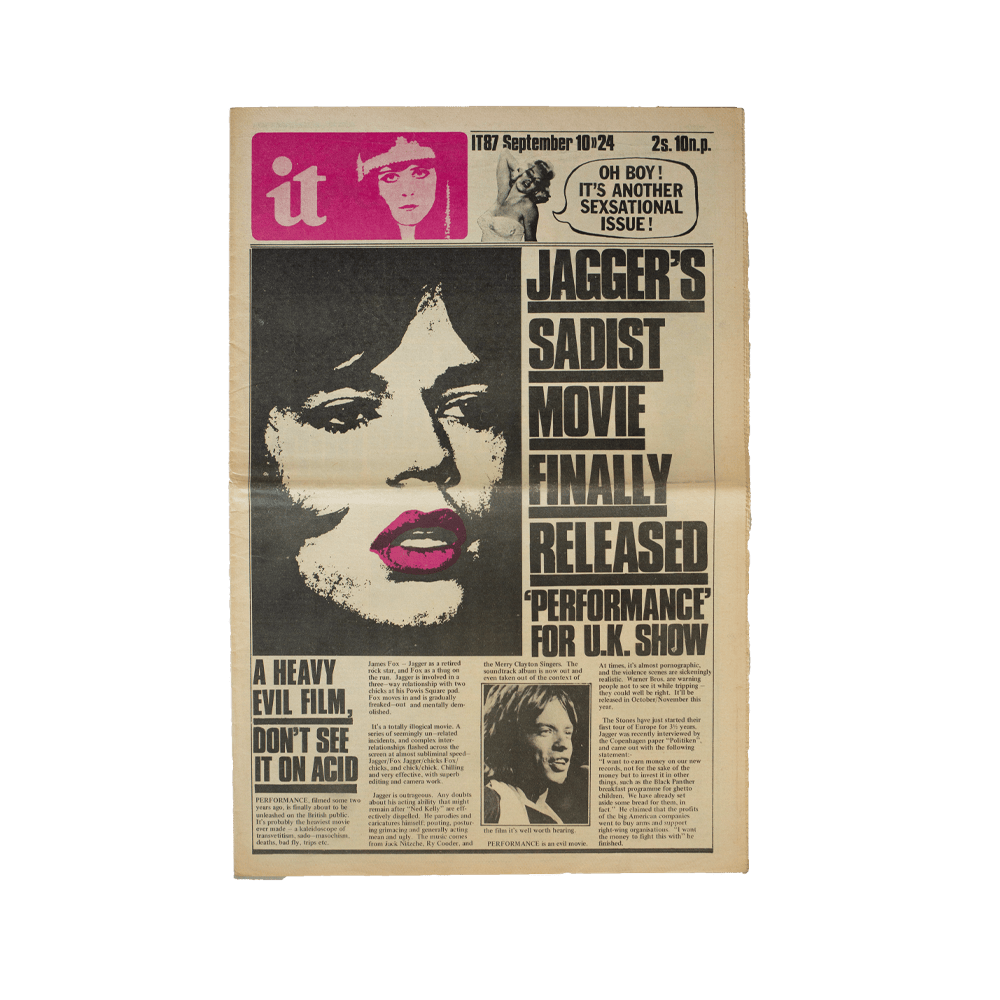
International Times issues were usually multi-colored and psychedelic, while later editions were almost completely without color. Its graphical style often changed: sometimes the front page was a poster or a comic strip, other times it looked more like a tabloid or traditional newspaper. In the late seventies, the punk “cut and paste” style was also sometimes used. The paper’s logo was a black-and-white image of Theda Bara — an American silent film and stage actress and one of cinema’s first sex symbols.
A Counterculture Community
What made The International Times truly special was its community — artists, writers, musicians, and readers who believed in creating something outside the system. It wasn’t just a newspaper; it was a declaration that independent voices matter. With contributions from the likes of Allen Ginsberg, William S. Burroughs, Germaine Greer and John Peel, the International Times featured the most prominent underground voices of the day.
Today, its legacy lives on through the underground press and the creative rebels who continue to challenge convention. At Bynx, we celebrate that same spirit — the artists and thinkers who use ink, words, and images to spark something new.
🗞️ Explore our Underground Press collection and rediscover the raw, unfiltered energy of publications like The International Times — the paper that helped change the conversation.
Comments are closed.