

Revolution on the Page, Sound in the Streets: Honouring Black Creativity This Black History Month
Black History Month is a time to reflect on the immeasurable contributions Black artists, writers, musicians, and cultural leaders have made to the canon of global music, art, and literature. From radical print culture to revolutionary sound, Black creativity has shaped the way we see, hear, and understand the world.
At Bynx, we’re proud to steward a collection of rare books, magazines, and ephemera that document these movements — not as distant history, but as living, breathing culture.
Art as Revolution: The Visual Language of Liberation
Few publications capture the intersection of art and activism as powerfully as The Black Panther newspaper. Our issue of Black Panther Magazine (Vol. V, No. 16) stands as a vivid example of how graphic design became a political weapon. Under the artistic direction of Emory Douglas, the Party’s Minister of Culture, the publication transformed revolutionary messaging into bold, iconic imagery that continues to influence visual culture today.
Douglas’s work — explored further in The Revolutionary Art of Emory Douglas — didn’t merely illustrate a movement; it defined its aesthetic. His stark compositions, heavy lines, and urgent symbolism reshaped political art and cemented his place within the broader canon of 20th-century visual expression.
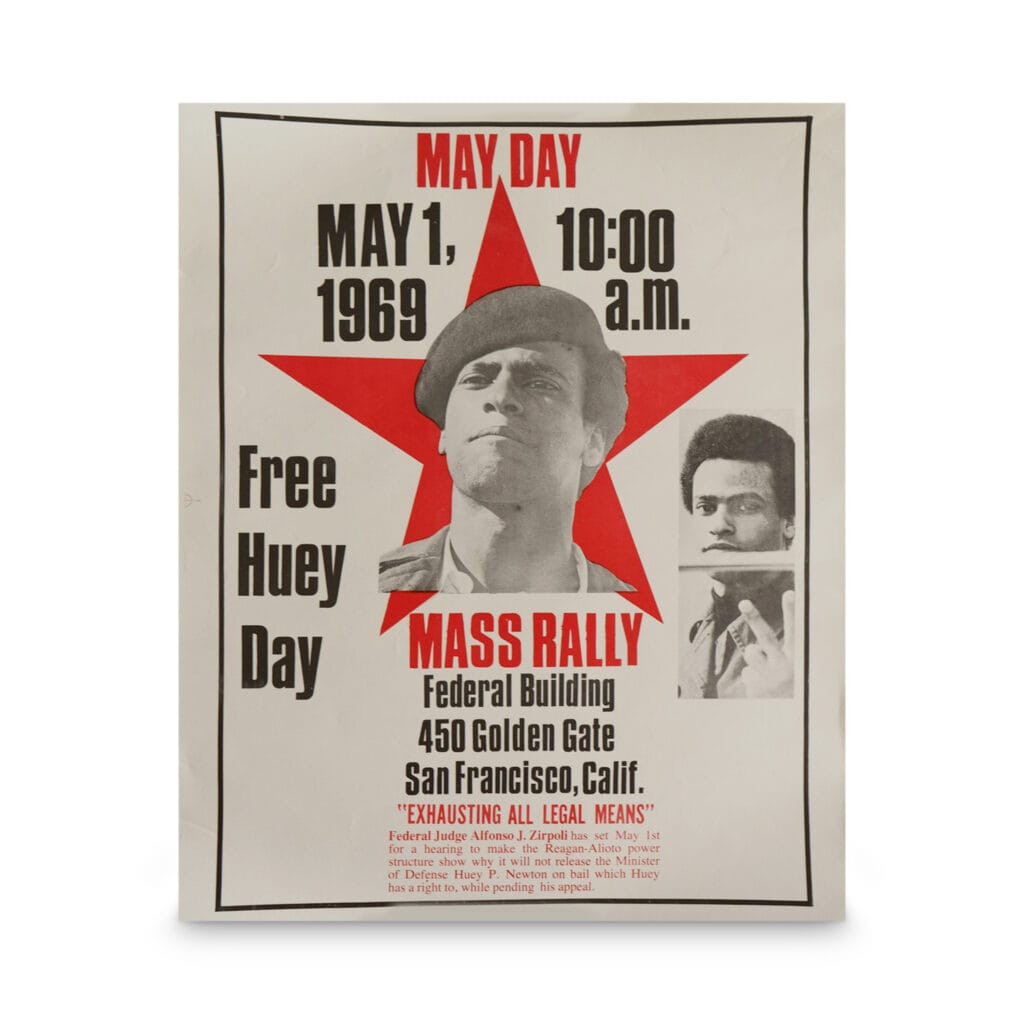
Similarly, protest ephemera such as the May Day 1969 poster and March Rally 1968 counterculture materials reflect how design functioned as both documentation and mobilisation. These works are more than printed paper — they are artefacts of collective resistance. They reveal how Black activism and cross-movement solidarity informed the wider countercultural visual landscape.
Through these materials, we see how Black artists helped redefine the relationship between art and power.
Literature as Testimony and Theory
Black literary voices have shaped political philosophy, cultural criticism, and personal narrative in ways that continue to reverberate today.
The autobiography of Angela Davis stands as both personal testimony and intellectual landmark — a work that bridges lived experience with rigorous political thought. Davis’s writing situates Black liberation within global struggles against inequality, influencing generations of activists, scholars, and artists.
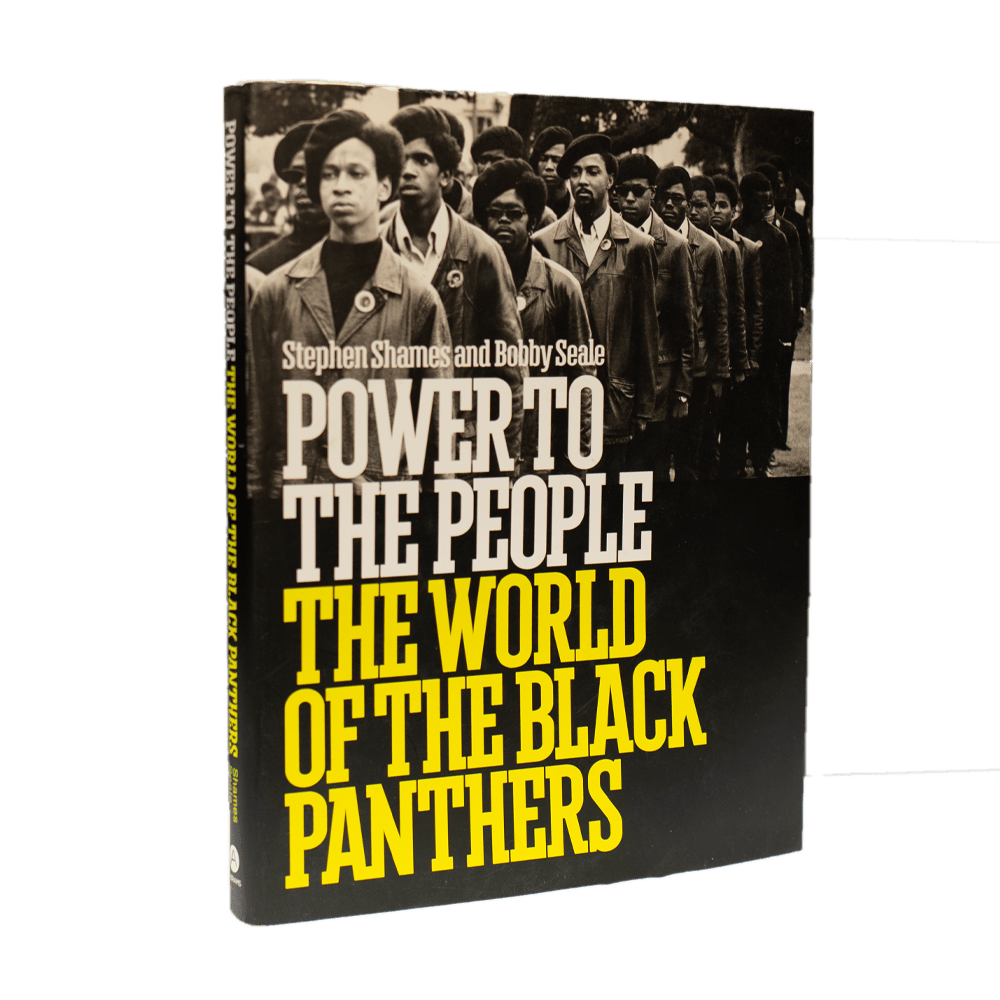
Likewise, Bobby Seale’s Power to the People offers an insider account of the Black Panther Party’s formation and mission. It is not only a political memoir but a crucial primary source in the study of American social movements.
In a contemporary context, works such as John Barnes’ The Uncomfortable Truth About Racism demonstrate how Black authors continue to interrogate structures of power, inviting readers into necessary and ongoing conversations.
Together, these texts underscore the literary canon’s expansion through Black voices — voices that challenge, theorise, and reshape the cultural narrative.
Sound That Changed the World

In music, Black artists have not merely contributed to genres — they have created them.
Jimi Hendrix revolutionized the electric guitar, bending blues, rock, and psychedelia into something entirely new. His work expanded the sonic possibilities of modern music, influencing countless artists across decades. The Ultimate Lyric Book offers insight into the poetic undercurrents of his songwriting, revealing a literary depth often overshadowed by his virtuosic performance.
Bob Marley, through reggae, transformed local Jamaican sound into a global language of resistance and unity. As explored in Genesis: Bob Marley – Rebel Music, Marley’s work fused spirituality, politics, and melody, helping to situate reggae firmly within the international musical canon.
Both artists demonstrate how Black musical innovation transcends genre — reshaping cultural identity and influencing fashion, language, and political consciousness worldwide. Indeed, they were merely building upon the groundwork laid by generations of black musicians before them.
Preserving Cultural Memory
Black History Month reminds us that cultural history is not abstract — it lives in tangible objects. Magazines passed hand to hand; posters wheat-pasted to city walls; lyric books annotated by fans; memoirs written in defiance of silence.
The items in our collection — from Black Panther publications to May Day protest posters, from Hendrix’s lyrics to Marley’s rebel spirit — are fragments of a larger narrative: one in which Black artists and thinkers have continuously expanded the boundaries of creative expression.
At Bynx, we see these works not only as collectables, but as custodians of memory. They remind us that the canon of music, art, and literature is richer, louder, and more revolutionary because of Black creativity.
This Black History Month, we honour those voices — and the enduring impact they have had on culture past, present, and future.
Comments are closed.