

Before backstage passes became branded lanyards and fandom migrated to Instagram comment sections, there existed a very different kind of cultural figure: the groupie.
And no name embodies that world more completely than Pamela Des Barres — writer, muse, participant, historian, and perhaps the most famous insider of rock’s wildest era. Her story isn’t just about proximity to fame. It’s about devotion — to music, identity, freedom, and a moment in time that could never quite exist again.
“I’m With the Band”: Inside Rock’s Inner Circle

Emerging from Los Angeles’ exploding Sunset Strip scene of the late 1960s, Des Barres didn’t merely stumble into rock history. In fact, she ran toward it. A lifelong music obsessive, she embedded herself within the counterculture orbit surrounding artists like Frank Zappa, eventually becoming part of the avant-garde collective The GTOs (Girls Together Outrageously).
Her legendary memoir I'm with the Band: Confessions of a Groupie transformed private diaries into one of rock publishing’s definitive firsthand accounts. It chronicled relationships, tours, heartbreak, creativity, and the emotional intensity of life lived entirely in music’s gravitational pull.
Des Barres’ experiences placed her alongside figures who defined the era — not merely as romantic companions, but as collaborators in the aesthetic and emotional culture surrounding rock itself. Groupies styled bands, inspired lyrics, shaped fashion, and helped construct the mythology audiences consumed from afar.
In many ways, they were unpaid cultural architects.
Groupies, Freedom & the Sexual Revolution
To understand Pamela Des Barres is to understand the social moment that produced her.
The late ’60s and early ’70s represented a collision of newly accessible birth control, youth rebellion, feminist awakening, and artistic experimentation. For many women in that scene, intimacy with musicians wasn’t framed as exploitation — it was participation. It was like a declaration of autonomy within a culture rewriting rules in real time.
Des Barres herself has long described "groupiedom" as being rooted in love for music rather than fame. The emotional connection came first, then mythology second.
But history complicates nostalgia.
What once read as liberation now invites harder conversations about power dynamics, celebrity privilege, and blurred boundaries. These discussions re amplified by modern movements demanding accountability across entertainment industries. Interestingly, Des Barres’ decision to publicly tell her own story decades ago helped open space for women to define their experiences in their own voices rather than remain rock folklore footnotes. The groupie evolved from scandal and into authorship.
From Muse to Author
Des Barres’ legacy ultimately lives less in backstage legend than on the printed page. Her memoir trilogy charts an unusually honest arc:
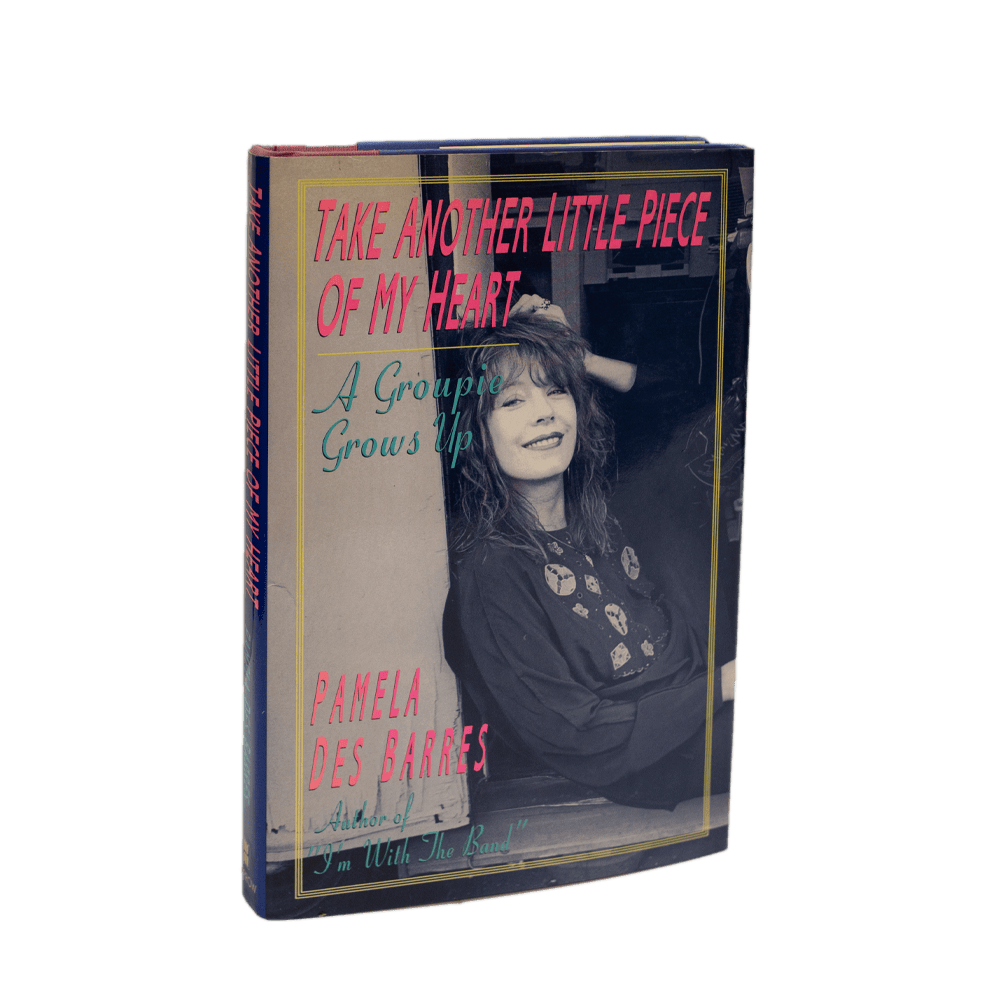
Take Another Little Piece of My Heart: A Groupie Grows Up explores maturity after the chaos — love, marriage, and identity beyond youth culture.
Rock Bottom: Dark Moments in Music Babylon turns the lens outward, documenting the darker emotional costs of rock mythology itself.

Together, these works reframe the “groupie” not as stereotype, but as narrator — someone documenting rock history from inside the room rather than outside the stage barrier.
Then vs. Now: Fandom in the Age of Distance
Today’s music culture is paradoxically closer and more distant.
Fans can message artists instantly yet rarely inhabit the communal physical worlds that defined Laurel Canyon parties or Sunset Strip nights. The intimacy that once existed between audiences and musicians has largely been replaced by managed access and digital branding. The modern equivalent of a groupie might be a superfan, influencer, or archivist — but the stakes feel different. Safer, perhaps. Less romantic. Certainly less chaotic.
Pamela Des Barres represents a fleeting era when fandom meant immersion — when loving music meant building your entire life around it.
Comments are closed.